
MagDrive Technologies

Revolutionizing Valve Actuation – No Stem Leaks. No Emissions.

The future of fluid control is here — engineered for zero environmental impact, maximum reliability, and industry-leading performance.

No stems. No leaks. No emissions.

MagDrive technology is a breakthrough in valve and actuator engineering. By replacing traditional mechanical linkages with magnetic actuation inside a hermetically sealed chamber, MagDrive eliminates the failure points of conventional designs. The result? Unmatched process safety, reliability, zero fugitive emissions, and performance that stands up to the harshest environments.
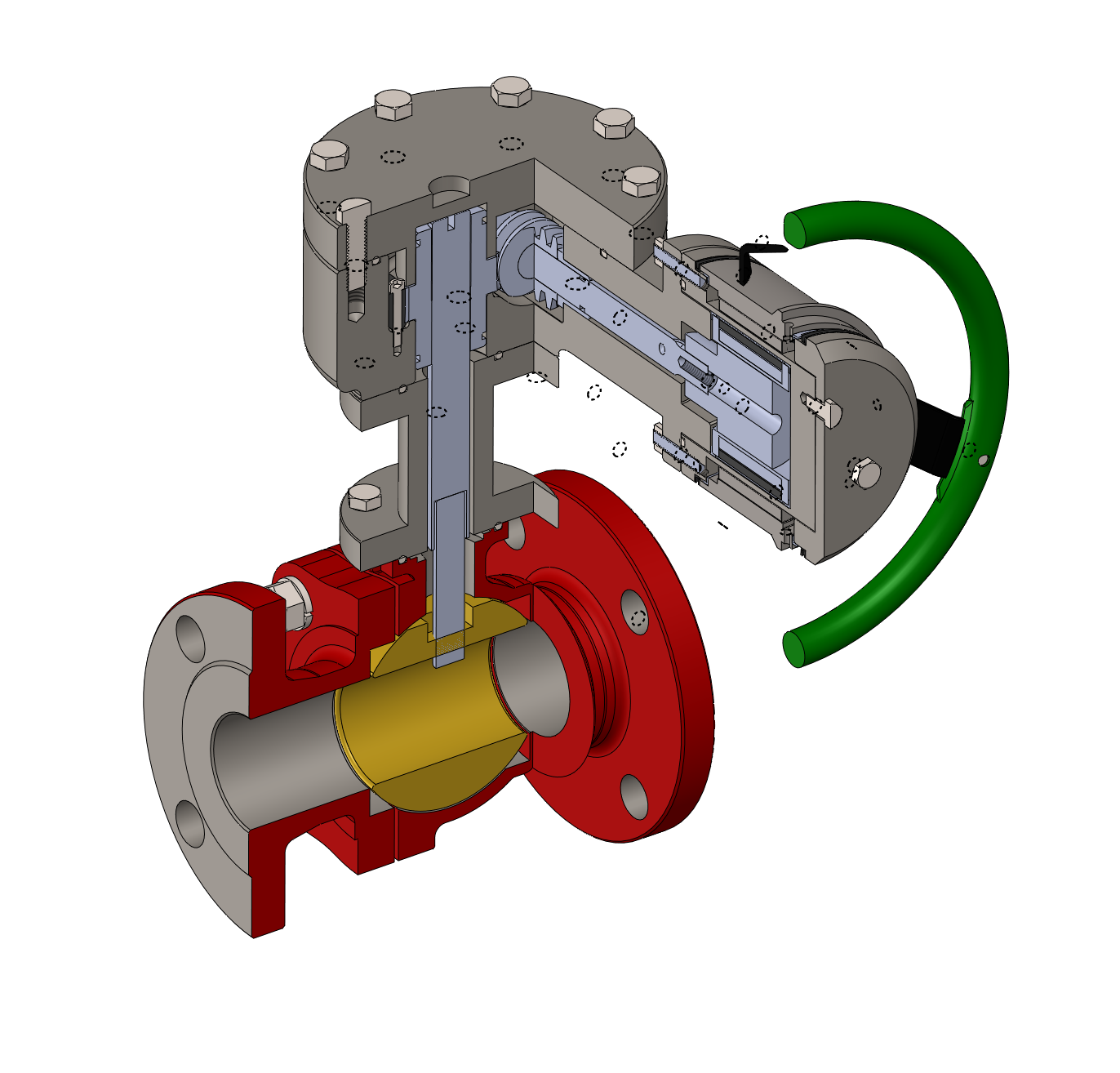

3D cutaway model of MagDrive valve actuator
Red horseshoe magnet icon

Magnetic Actuation

MagDrive uses a patented magnetic coupling designs to deliver maximum allowable stem torque through a fully sealed barrier — without any direct contact between internal and external components. This eliminates valve stem penetrations, removes leak paths, and ensures smooth, reliable performance even in extreme pressure or temperature conditions.

Red directional arrows icon

Hermetic Sealing

Our hermetically sealed design provides total isolation of internal mechanisms from the external environment. This not only eliminates leaks but also protects the internal components from dust, moisture, and corrosive materials.

Red no steam emissions icon

Zero-Emission Design

MagDrive is inherently leak-free, preventing fugitive methane and other greenhouse gases from escaping. This ensures adherence to the strictest ESG and regulatory standards — without costly retrofits or frequent maintenance.

Red wireless signal icon

Smart Sensor Integration

MagDrive can be equipped with advanced sensors for real-time monitoring of position, temperature, and performance. These smart features enable predictive maintenance, operational optimization, and integration with modern industrial IoT systems.

How It Works

The leader in magnetically actuated valves:

Frequently Asked Questions

MagDrive is the global pioneer in zero-emission valves through our proprietary Magnetically Actuated Valve (MAV) technology.

MAVs are leak-free flow control devices that use magnetic coupling to actuate the valve across a hermetically sealed chamber, enabling zero-emission performance by eliminating valve stem leaks paths completely.

Traditional industrial valves rely on mechanical stems that penetrate the valve body, using dynamic packing seals to allow motion while containing pressure. Over time, valve packing degradation is unavoidable, making leakage inevitable, even in the most well-maintained systems. Unlike traditional valves, MAVs eliminate the valve stem penetration across the pressure boundary, and the valve is actuated across a hermetically sealed chamber using magnets. MAVs eliminate valve stem leak paths completely for true zero-emission performance.

MAVs can be applied to virtually any industry and application, including oil and gas, hydrogen, LNG and cryogenic, aerospace and defense, nuclear, petrochemical, and more.

Yes, MAVs prevent valve stem leakage entirely. Using a solid-wall chamber, the MAV encapsulates valve stems and packing to fully contain emissions, with no physical valve stem leak path.  

Neither – MagDrive is an engineering company who pioneered MAVs and empowers valve manufactures to integrate the MAV into existing valve designs through technology licensing partnerships.

MAVs fit valves from ⅛” up to over 48″ in diameter. If a valve can be operated by a hand wheel, it can easily be driven by a MAV. 

The size difference between a traditional valve and a MAV depends on the type of valve. In the case of a rising stem, the overall valve footprint remains similar to that of a traditional valve, and remains much smaller than competing bellows solutions. For quarter-turn valves, the magnetic MagDrive actuator is added to the valve body, increasing the size. In general, however, the size of the MAV is relatively similar to the valve size. 

MAVs operate in a broad range of temperature conditions and have been proven at cryogenic temperatures down to -300°F, and have been API 6FA certified, passing 1,800°F fire testing with zero leaks. 

MAVs operate within ASME pressure classes ranging from 150 to 2500. 

MAVs have demonstrated reliable performance in NASA applications at temperatures down to –333°F on multiple compounds, with no emissions detected above background. They are third-party certified to meet ISO 15848-1 AM CC2 for linear valves, ISO 15848-1 AH CO3 for quarter-turn valves, and ISO 15848-2, as well as API 624, 598, 641, and 6FA fire testing. Additional validations include nuclear steam applications and extensive field deployment. Explore our Validations page to learn more.

Yes, the device can be configured for fail-safe operation. 

We design MAVs to deliver the maximum allowable stem torque, enabling the valve to operate at its full capability.

Yes, the device can be engineered to limit torque or thrust to a defined value based on the valve and application requirements. This can be controlled closely.

MAVs can be mounted directly over the valve stem on ball, plug, or butterfly valves.

MAVs are integrated directly into the valve body on gate, globe, knife, needle, and piston valves.

In some cases, the internal gears and threads are lubricated with process fluid, similar to magnetic drive pumps. In other cases, internal mechanisms are lubricated with grease that is compatible with the process fluid.

Yes, radiation has little effect on magnetic performance, with greater degradation to barium ferrite and nickel- based magnets.

MagDrive can be configured to work with most automated actuators, electric or otherwise.  MagDrive’s patented E-Drive is currently under development with NASA’s IGNITE program, and will provide a compact electromagnetically actuated option with no external moving parts, ideal for extreme environments.

To speak with a MAVs expert, please fill out the form below, or visit our Contact Us page.

Traditional Actuators vs MagDrive

Case Study

1

Eliminated 100% of methane leakage in multiple live service pilot deployments.

2

Operated flawlessly at cryogenic temperatures (-196°C) without performance degradation.

3

Maintained full functionality under extreme high-pressure conditions.

4

Reduced maintenance costs by over 60% compared to traditional actuators.

5

Delivered zero unplanned downtime over the entire pilot testing period.

6

Achieved fast, precise actuation cycles exceeding industry reliability benchmarks.